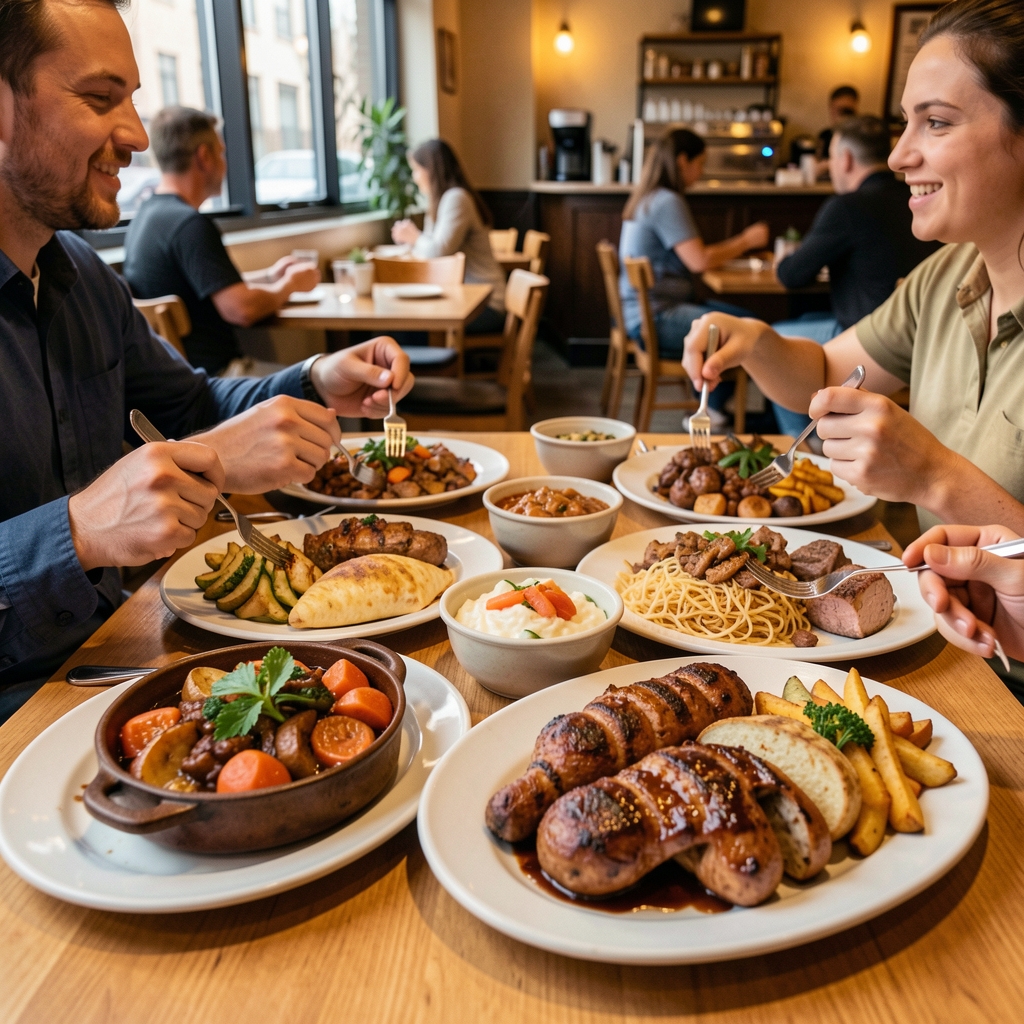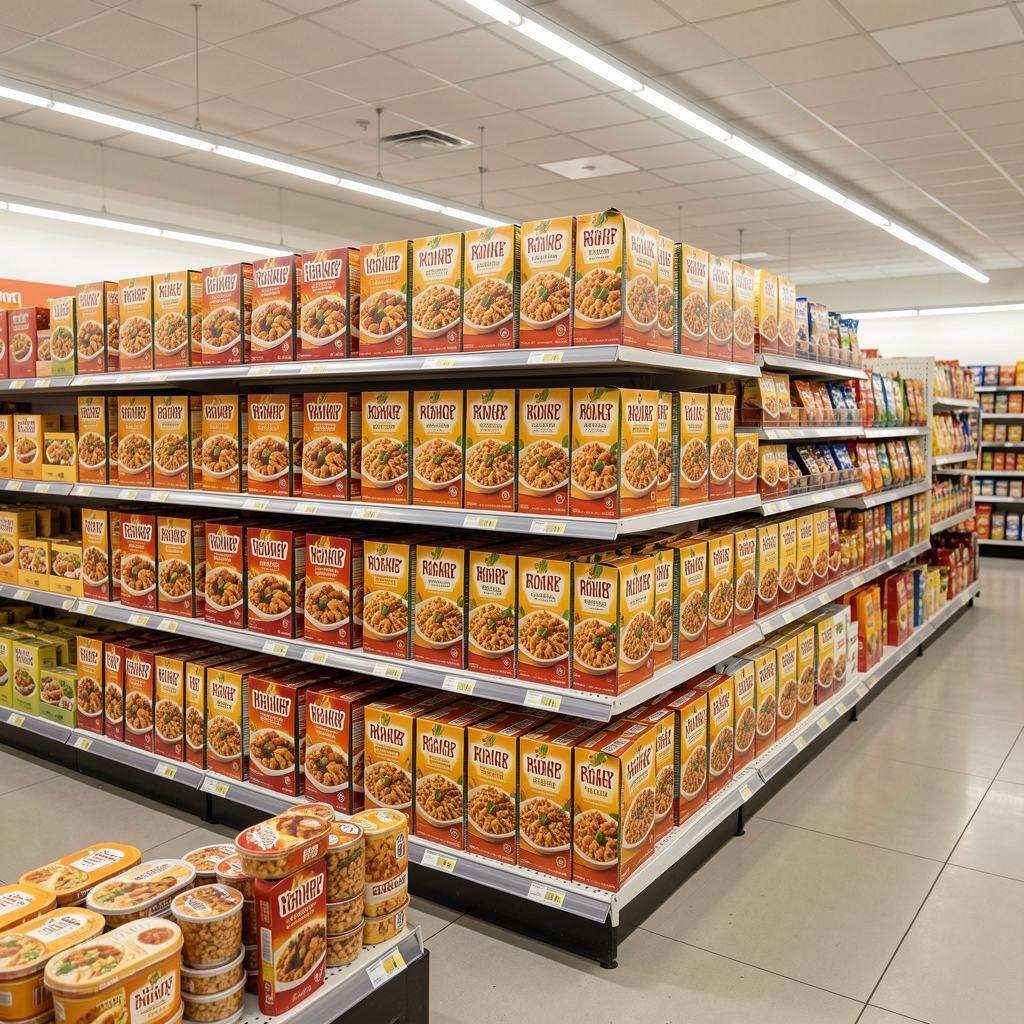
Convenience food patterns do not arrive suddenly in a household. They accumulate over months — a ready meal on a Wednesday when time ran short, a supermarket sandwich replacing a lunch that was never prepared, a Friday takeaway that became a standing arrangement. Individually, each substitution feels unremarkable. Together, they begin to constitute the week's actual nutritional landscape.
The Architecture of Convenience
Processed food reliance is rarely a single decision. It is, more accurately, the cumulative output of a scheduling system that has optimised for time over nutritional consideration. When the working day extends past seven in the evening, the energy required to plan, procure, and prepare a meal from unprocessed ingredients becomes a variable that the household quietly eliminates. The ready meal fills that gap not because anyone chose it philosophically, but because it was there.
What researchers in nutritional epidemiology have observed — and what Embern Notebook's editorial review of published literature confirms — is that convenience food patterns, once embedded, tend to reinforce themselves. A week in which four of seven evening meals come from packaging creates an expectation of low-effort eating. The following week, the threshold for reaching for a ready meal lowers. Within a month, cooking from scratch begins to feel like an exceptional event rather than a default.
This is not a character observation. It is a systems observation. The pattern is driven by infrastructure — proximity to shops, working hours, the presence or absence of cooking knowledge, the number of people in the household who share preparation responsibilities. Understanding convenience food reliance requires understanding that infrastructure before reaching for explanations rooted in individual willpower.
"The pattern is driven by infrastructure. Understanding convenience food reliance requires understanding that infrastructure before reaching for explanations rooted in individual willpower."
Hidden Sugars and Salt: The Invisible Load
One of the less visible consequences of routine ready-meal consumption is the cumulative intake of hidden sugars in everyday food. A chilled pasta sauce, a low-fat yoghurt, a supermarket soup — each carries sugar quantities that the label presents in grams rather than in any contextualised form. For a household consuming these products across four or five occasions a week, the total added-sugar intake may substantially exceed what they would have chosen had they been preparing equivalent meals from primary ingredients.
High-salt food habits follow a similar pattern. Processed and pre-prepared foods account for the majority of dietary sodium in most UK households — not from the salt added at table, but from the salt embedded invisibly in manufacturing. Bread, cereals, tinned goods, cured items: each contributes to a sodium load that is genuinely difficult to track without reading labels at a level of attention that most people do not apply to routine grocery shopping.
The public health literature consistently identifies this invisible load as a meaningful contributor to weight patterns and cardiovascular indicators over the long term. The challenge is that the accumulation is slow enough to be imperceptible in daily life, which is partly why awareness of it tends to arise only retrospectively.

Nutritional labelling, January 2026 — Embern Notebook archive
Refined Carbohydrates and Weekly Weight Patterns
Refined carbohydrates and weight is a relationship that has attracted substantial nutritional research attention over the past two decades. The mechanism is reasonably well characterised: refined starches — white bread, standard pasta, processed breakfast cereals — are digested rapidly, producing a sharper and shorter-lived response from the body's energy-regulation signals than their less-processed equivalents. The result, observed across multiple cohort studies, is that consumption of high-refined-carbohydrate diets correlates with patterns of recurring hunger at shorter intervals.
For households relying heavily on convenience and processed foods, the refined carbohydrate load is typically high by default. Most ready meals, sandwiches, and packaged snack items are built around white flour, refined rice, or processed corn derivatives. This is partly because these ingredients are inexpensive, partly because they produce consistent textures and shelf lives, and partly because the food-manufacturing industry developed its product ranges during an era when dietary fibre and glycaemic considerations were not commercial priorities.
The consequence, observed longitudinally, is that households with high ready-meal reliance tend also to exhibit higher overall caloric intake — not because the meals are calorically dense per portion, but because the hunger pattern that refined carbohydrates generate promotes more frequent snacking between main meals. Mindless snacking, in this context, is often a physiological response to the eating pattern rather than an independent habit.
- 01Convenience food patterns embed through scheduling pressures, not deliberate nutritional choices.
- 02Hidden sugars in everyday food accumulate across ready meals, sauces, and packaged items without visible signalling.
- 03High-salt food habits arise primarily from manufactured salt content, not from salt added at the table.
- 04Refined carbohydrates and weight patterns are linked partly through the recurring hunger cycle they generate.
- 05Gradual dietary improvement tends to follow structural change — adjusting shopping habits, cooking logistics, and weekly rhythm rather than willpower alone.
Fast Food Frequency and the Weekend Indulgence Pattern
Fast food frequency in UK households tends to cluster at predictable points in the weekly calendar. Monday through Thursday, the pattern is often one of hurried eating at home — sandwiches, reheated portions, simple pasta. Friday evening introduces the transition: the working week is over, the social register shifts, and fast food or restaurant eating frequency rises sharply. Saturday extends this, often incorporating a takeaway or a meal out. Sunday may feature a home-cooked meal, but it is frequently preceded by a Saturday indulgence that leaves the household somewhat averse to kitchen effort.
Weekend indulgence patterns are documented across nutritional survey data and dietary recall studies. They represent a distinct dietary subregion within the week — not the steady-state eating behaviour that most people associate with their "normal" diet, but not exceptional either. For many households, the weekend now constitutes two or three days of substantially different eating, with higher caloric density, more restaurant eating, and greater fast-food frequency than the working week.
The aggregate effect on weekly energy balance is meaningful. A household that maintains a relatively consistent weekday eating pattern but significantly exceeds its nutritional targets on Friday, Saturday, and Sunday may find that the overall week's intake diverges considerably from what a typical weekday log would suggest.
Cooking at Home: What the Evidence Suggests
The cooking at home benefits identified across nutritional studies are consistent enough to warrant attention as a structural intervention rather than a lifestyle preference. Households that prepare the majority of their meals from primary ingredients tend to consume less sodium, less added sugar, more dietary fibre, and fewer ultra-processed additives than households of equivalent socioeconomic profile that rely predominantly on pre-prepared foods. The difference is not primarily one of effort or discipline; it is primarily one of what goes into the pot.
This is not to frame home cooking as a universal remedy for all nutritional concerns. A household that cooks at home primarily produces pasta with jarred sauce and reheated tinned goods is technically cooking at home, but the nutritional profile may not diverge substantially from a ready-meal baseline. The cooking at home benefit accrues specifically when primary ingredients — vegetables, legumes, whole grains, unprocessed proteins — constitute the bulk of the raw materials.
Gradual dietary improvement, then, is often better framed as a logistics question than a nutritional one. The question is not "what should I eat" but "what conditions need to be in place for me to prepare it." That might mean different shopping patterns, different time allocations within the week, a different division of household labour, or a reduced reliance on meal formats that require extended preparation windows.